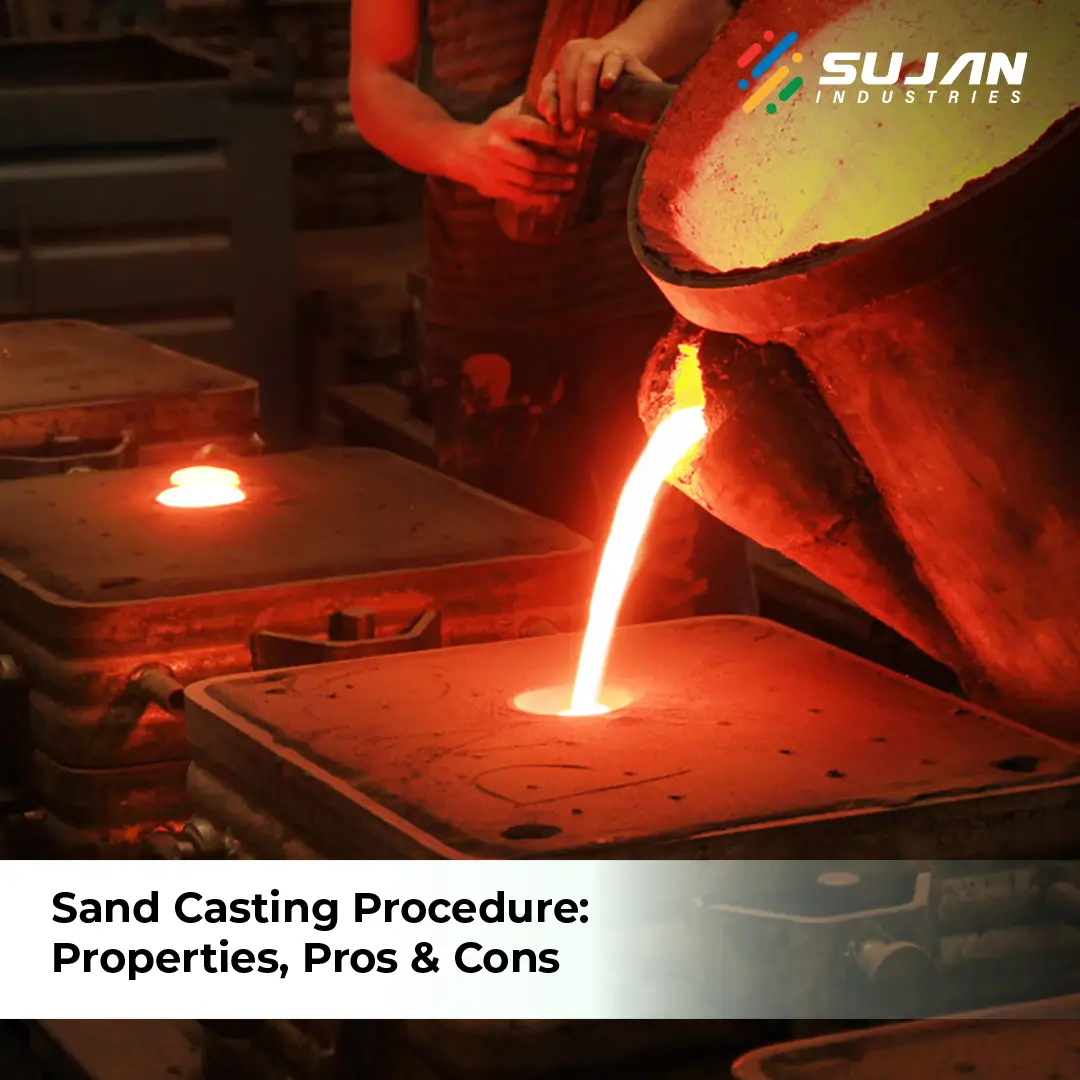
The sand casting procedure is among the most popular and oldest manufacturing processes and continues to propel modern industries with its adaptability and low cost. This process simplifies and makes metal shaping easy, whether for small machine parts or massive industrial components. So, knowledge of its process and sand characteristics helps the business improve quality, minimize defects, and maximize production.
Understanding the Properties That Are Needed in Sand Casting Procedure
The selection of sand depends on the type of metal, casting shape, and the casting engineer’s tolerance requirements. Regardless of the type, sand possesses the following properties:
- Refractoriness: The capacity to resist melting and work at higher temperatures is known as refractoriness. Molten metal should not fuse with the sand. For aluminum, sand must withstand approximately 700 °C; for steel castings, approximately 1500 °C.
- Permeability: The property of allowing gases and steam to escape is called permeability. Sand contains water and when casting, it forms steam. If gases are trapped, they can lead to defects such as blowholes. So, good permeability ensures a flawless, clean casting.
- High Thermal Conductivity: The sand can easily be penetrated by heat through this property. It helps cool the molten metal. Quicker casting enhances casting quality and shortens production time.
- Low Thermal Expansion: When heated, sand is not supposed to spread excessively. The low thermal expansion helps the mold maintain its shape as it is poured and cooled. This eliminates cracks and distortion of the final product.
- Flowability: The ease with which the sand fills the mold is known as flowability. It must penetrate every spot and small detail of the pattern. Complex shapes require a high flowability whereas simple shapes may not require it as much.
The Detailed Sand Casting Procedure You Need to Know
The sand casting procedure is simple in the case of simple products. In complicated shapes special attention is required.
- Mold Creation:The mold is made using a pattern of the end product. It has the same shape and size and may be reused to produce several molds. The pattern is divided in half and placed in sandboxes, where sand is pressed around it. Once the pattern is removed, the two halves, termed the cope and drag, are bonded together to create a complete cavity.
- Gating System Creation: The gating system regulates the flow of molten metal to the mold. A good design will guarantee good flow, low turbulence and eliminate defects. It involves pouring the basin and sprue to flow, runners to flow, gates to flow in a controlled manner, risers to manage shrinkage, and cores to produce hollow sections within the casting.
- Casting: The molten metal is then left to cool and solidify in the mold after it has been filled. Depending on the material, cooling can be either natural or controlled. Remember, proper cooling is highly significant.
- Shakeout and Sand Recovery: After the metal solidifies, the sand mold is broken to obtain the sand casting. The component is then washed and forwarded to finish operations. The treated sand is collected and reused.
Pros and Cons of Using Sand Casting
Railway parts manufacturers in India have adopted sand casting because it is flexible and cost-effective. Although it has numerous benefits, it has some cons that need to be taken into account.
Pros of Sand Casting
- Cost-effective Process: Sand casting is a low-cost manufacturing technique because the materials used and the equipment are inexpensive. The sand is also reusable, further minimizing the overall production cost.
- Can Produce Complex Shapes: With sand casting, cores and appropriate mold design allow the creation of complex, detailed shapes. It is very adaptable and appropriate to both simple and complex parts.
- No Size Limitation: It can manufacture components of any size, from tiny elements to giant industrial products. This is why it is among the most multifaceted casting techniques applied in production.
Conclusion
Sand casting is still a good, common process for producing a variety of parts. Its affordability and flexibility make it highly sought after across industries. But, to get its full benefits, partnering with the right manufacturer is crucial. So, get in touch with Sujan Industries, as it follows a stringent quality control process and conducts quality tests before marketing the end product.