


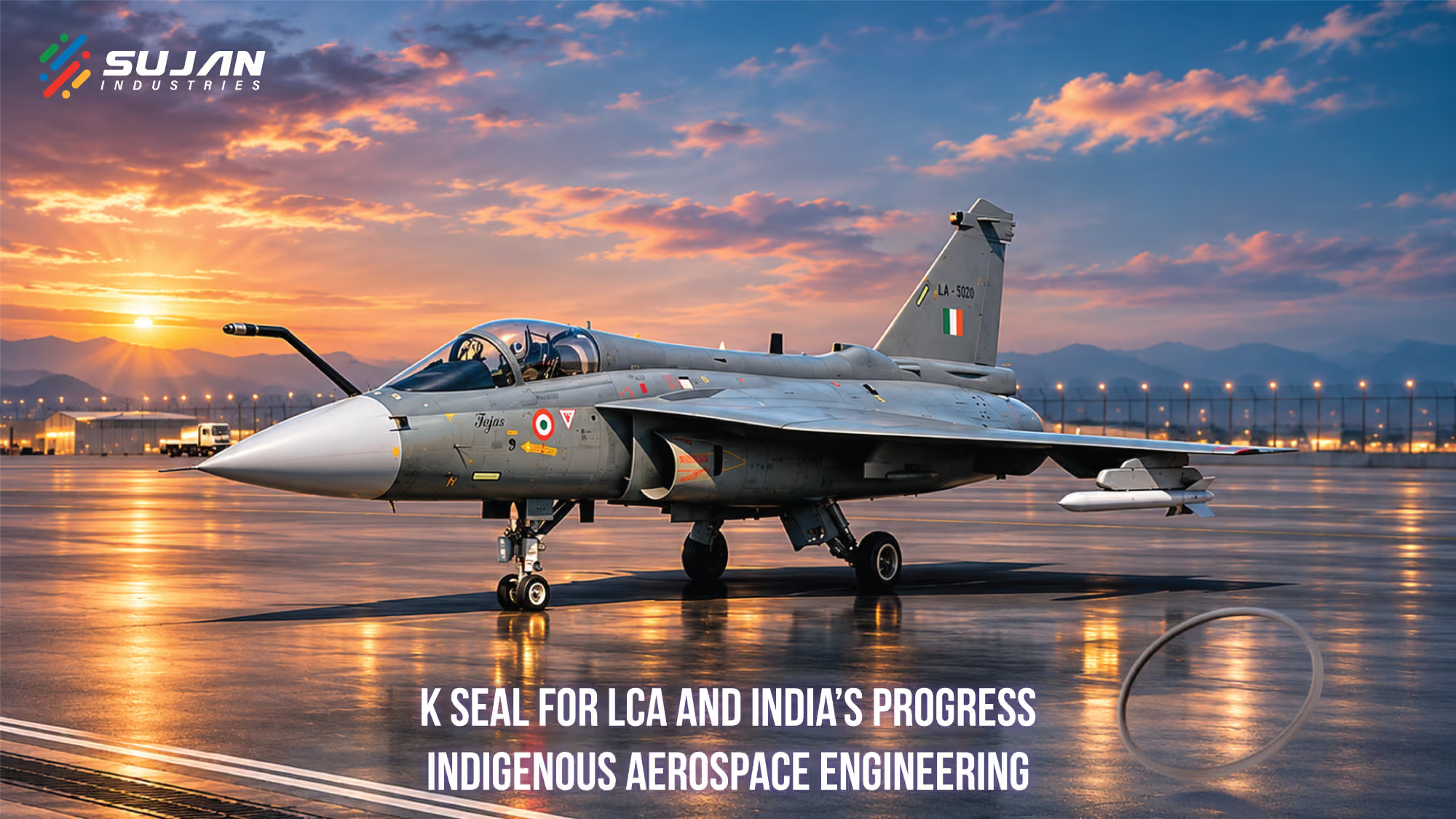
The fighter jet becomes famous for its speed and power but is actually made reliable by small components. The K Seal of LCA can be found on the engine air intake that doesn’t catch much attention. Nevertheless, it proves the advancements that have been made by the aerospace industry in India over the past few years. This guide sheds light on how the seal works and why it should be given importance. See how engineers transform rubber and cloth materials into aircraft components.
Defense manufacturing in India touched a peak of Rs 1.78 lakh crore in fiscal year 2025-26, says the Ministry of Defense. This performance is a result of the efforts of Indian engineers capable of producing essential components domestically. The engine inlet lip seal of the LCA is one such component. (Source)
In contrast, the defense minister had advocated for more cooperation between public and private sectors in the aerospace sector, and local production of such parts suggested that have control over the raw material and machinery used for producing these parts. (Source)
Every aircraft requires an air passage that should be sealed. This is the location where this seal operates.
The LCA Tejas K Seal connects the airframe to the engine inlet. This causes the air to flow into the engine without any leakage.
Nylon material supports the elastomer, and the presence of three lobes ensures that there is a snug fit. Besides, there is a metallic retaining ring behind the main lobe.
The testing begins with material tests, leakage tests, and aging tests by engineers. Also, the developer worked with ADA and DRDO to get the type approval.
Dependable suppliers in the home country are needed for the success of indigenous aircraft development programs as well. Modern aerospace components manufacturers in India are able to design, manufacture, and test parts that will survive in harsh flying environments.
The aerospace components should retain their dimensions and pressure tightness in case of heat and stress. This is why material control, tooling, and inspection are monitored throughout the production process.
One of the silicone rubber seals for the LCA program exceeds 750 mm in diameter. On the other hand, this size requires precision in molding.
As per the testimonial from the customer, the silicone seal was approved by CEMILAC and contributed to self-sufficiency. For this reason, it is hoped that the supplier would indigenize such components.
K Seal for LCA is an example of how local engineering can contribute to a national fighter plane program. Similarly, each approved vendor reduces the risks in programs requiring a consistent supply of components.
Successful flying involves parts that are often ignored. Seals ensure that air, liquids, and pressure stay in place.
Aerospace gaskets have to deal with severe heat, oil, and gases during all flights. For this reason, they need to retain their sealing strength as the aircraft frame and engine move and expand. The seals and gaskets employed on the aircraft have to withstand extreme heat, oil, and gas on each trip.
Different materials exhibit different behavior when under stress; rubber, cloth, and metals each react differently. In addition, polymer engineering allows the control of stiffness and flexibility.
Inspection and validation ensure that all components fall within their specific range. Indeed, aerospace seals manufacturers India need to repeat the process in every batch produced.
Every new indigenous seal lessens the dependency on external suppliers. Furthermore, this helps build the knowledge base that future programs use.
An air combat craft comprises the above-mentioned elements along with many other small parts. According to the Minister for defense, all those elements form the rungs of a long ladder. (Source)
These tasks together give a small seal a lot of importance.
The business Sujan Industries focuses on customers from sectors such as aerospace, defense, railways, automotive, and power with their engineered rubber and polymer solutions. Their aerospace operations leverage their sealing, vibration control, and fluid transfer expertise along with their testing facilities.
The company was formed in 1978 and relied upon the expertise in rubber and polymers developed through decades of experience to develop its K seal for LCA.
The company claims to have been supplying the defense and aerospace industries for many years now, which includes HAL and ADA. In addition to aerospace products, it makes rubber-to-metal and anti-vibration assemblies, as well as railroad products like the EMD gearcase seal.
The aerospace line includes K Seals, gaskets, oil seals, boots, bellows, O-rings, diaphragms, radar seals, and sleeves. Also, the company manufactures all these parts in accordance with high aerospace components requirements. The table below illustrates how these essential parts function in aircraft.
| Component | General Function |
|---|---|
| K Seal | Seals the engine inlet gap |
| Oil seals and O rings | Block fluid leakage at joints |
| Gaskets | Seal mating surfaces |
| Boots and bellows | Protect moving joints |
Material science, tooling, and inspection are all merged in every single piece. In consequence, the company converts knowledge of polymer materials into aerospace components.
The K Seal for LCA illustrates how Sujan Industries applies its polymer knowledge in developing reliable engine inlet seals. It also demonstrates how local engineering enhances the aerospace industry chain in India and native aircraft manufacturing.
Sujan Industries manufactures aerospace seals according to strict specifications and project needs. Please contact us directly at +91 9175745219 or visit us on our website.