



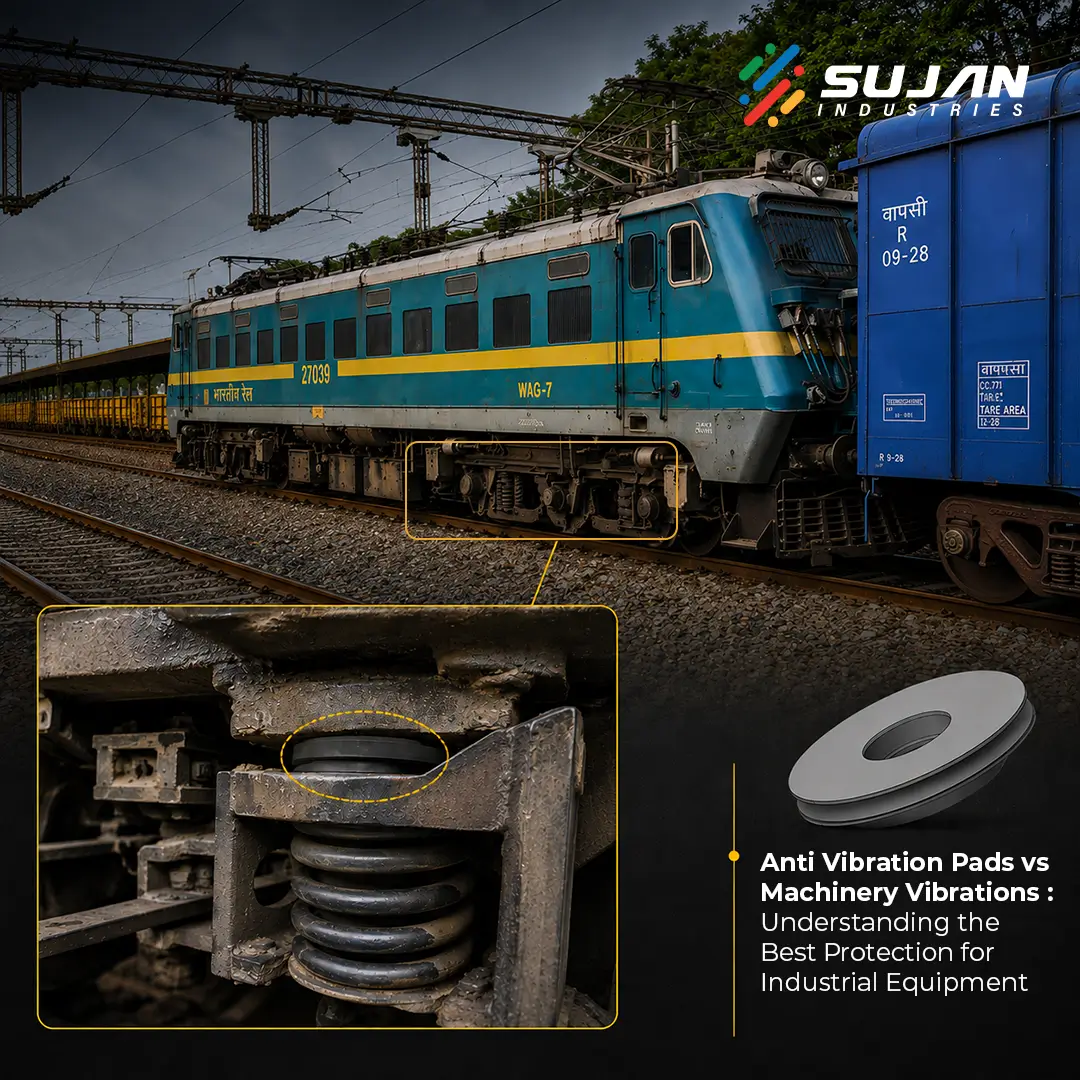
Vibration in machines quietly reduces efficiency, increases energy consumption, and decreases the lifespan of parts in the factory. The engineer considers two solutions: either to prevent the vibration from spreading or to cure the damage caused by the vibration. Anti vibration pads are at the heart of this dilemma, providing a tested shield between the machine and the floor. The following guide provides a comparison between the use of anti vibration pads and the absence of such protection regarding performance, safety, and price to help you choose the best option.
Movement is produced whenever there is operation in any engine, motor, compressor, pump, or press. However, movement can turn into vibration if it remains unchecked, and vibration produces noise, wear, and failure.
Preventive techniques intervene to reduce vibration at its root cause, instead of addressing failures caused by vibrations. Learning the difference between preventing vibrations and uncontrolled vibrations is crucial for the plant management’s decision-making process.
Vibration control and vibration generation sit on opposite ends of the same problem. One protects equipment proactively; the other, left unchecked, wears it down over time.
Anti vibration pads absorb energy before it reaches the machine frame or the floor. However, vibration creation is natural in case the engines turn, cylinders move, or blades turn. Control is preventive in nature, but uncontrolled creation always results in destruction.
Uncontrolled vibration creates misalignment, lowers accuracy, and affects the production process. On the contrary, stand-alone machines are more effective and also maintain their tolerances much more easily. The malfunctioning of equipment accounts for 42% of unplanned downtime in manufacturing plants, as reported by Manufacturing Lead Generation in 2026.
Continuous shaking causes bearings, bolts, and seals to wear out more quickly than is possible through ordinary wear and tear, while for isolated machinery, the stress accumulated is much lower. A worn anti vibration mount loses its damping ability and needs quicker replacement. Isolated equipment simply asks for fewer repairs and holds up longer between service visits.
Vibrating machinery generates structure-borne noise that travels through floors and walls, unlike isolated equipment that runs noticeably quieter. It results in an increase in noise level on the shop floor and increases fatigue among operators. Quieter machines allow workers to hear alarms and instructions from other employees easily.
Preventive isolation costs a fraction of what unplanned downtime and part replacement demand. Destruction caused by the extended use of vibrations, on the other hand, requires expensive repairs and downtime, which currently averages up to $260,000 per hour. Early investment in anti vibration pads will more than make up for itself.
The prices may differ depending on the geographical region, the materials used, and the size of the pad. The following table illustrates an estimation of the prices of industrial vibration pads in 2026.
| Region | Approx. Price Range (per pad) |
|---|---|
| India | ₹70 – ₹1,650 (~$0.85–$20), depending on size and thickness |
| United States | $2 – $8.5 per pad (4-packs priced $8–$34) |
| Global Market | Industry valued at $5.21 billion in 2025, projected to reach $7.25 billion by 2034 |
The vibration isolation pads act as an absorbing buffer between the equipment and the ground. The pad absorbs vibrations before they spread into the structure.
Pads bring more than quiet operation to a facility. They protect the following aspects of the daily functioning of plants:
All these advantages mean fewer failures and more consistent production on a daily basis.
By providing stability, all parts of the machine remain in their correct alignment and function according to their engineering tolerance, including engine mounts and HVAC. Having a stable platform ensures proper leveling of footing on an uneven surface, even distribution of weight through the mounting point, and reduced micro-movements that cause bolts to become loose.
Vibration absorbing pads deal with sound reduction as well as with machine vibration. The shock loads are reduced while sound transmission is reduced.
These shock pads absorb shock due to stamping presses, compressors, and heavy rotating machinery. It distributes the shock over a wider area than the concentration of force. This prevents the flooring or structure from getting damaged by shocks.
Repetitive shock loading results in fatigue of metallic components faster than low-frequency vibration alone. The absorber pads dampen shock loading during each cycle, minimizing the stress on the components. This reduces the possibility of failure of the components due to a sudden failure.
Less shock and vibration mean a more relaxed working environment for the operator. Machines function more effectively as they do not oppose their own motion. The safety of the machines increases as fewer parts move around unexpectedly during shifts.
Consider the pad composition and load capacity according to the machine’s weight and vibration frequency. Rubber is appropriate for standard machines, whereas neoprene can resist oils better. In the case of automobiles or railroad vehicles, a strut mount might be the best choice. Remember to verify the pad thickness and hardness rating prior to making a purchase.
Protection of industrial machinery starts with choosing the right anti-vibration protection product that will suit your needs. The use of anti vibration pads helps to absorb shock, decrease noise, and extend the useful life of machines in different industries.
At Sujan Industries, we produce quality anti vibration pads and mounts, which are very strong and precisely engineered for carrying large industrial weights. We can help you choose the right pad that will assure efficient and effective functioning of your machinery.