



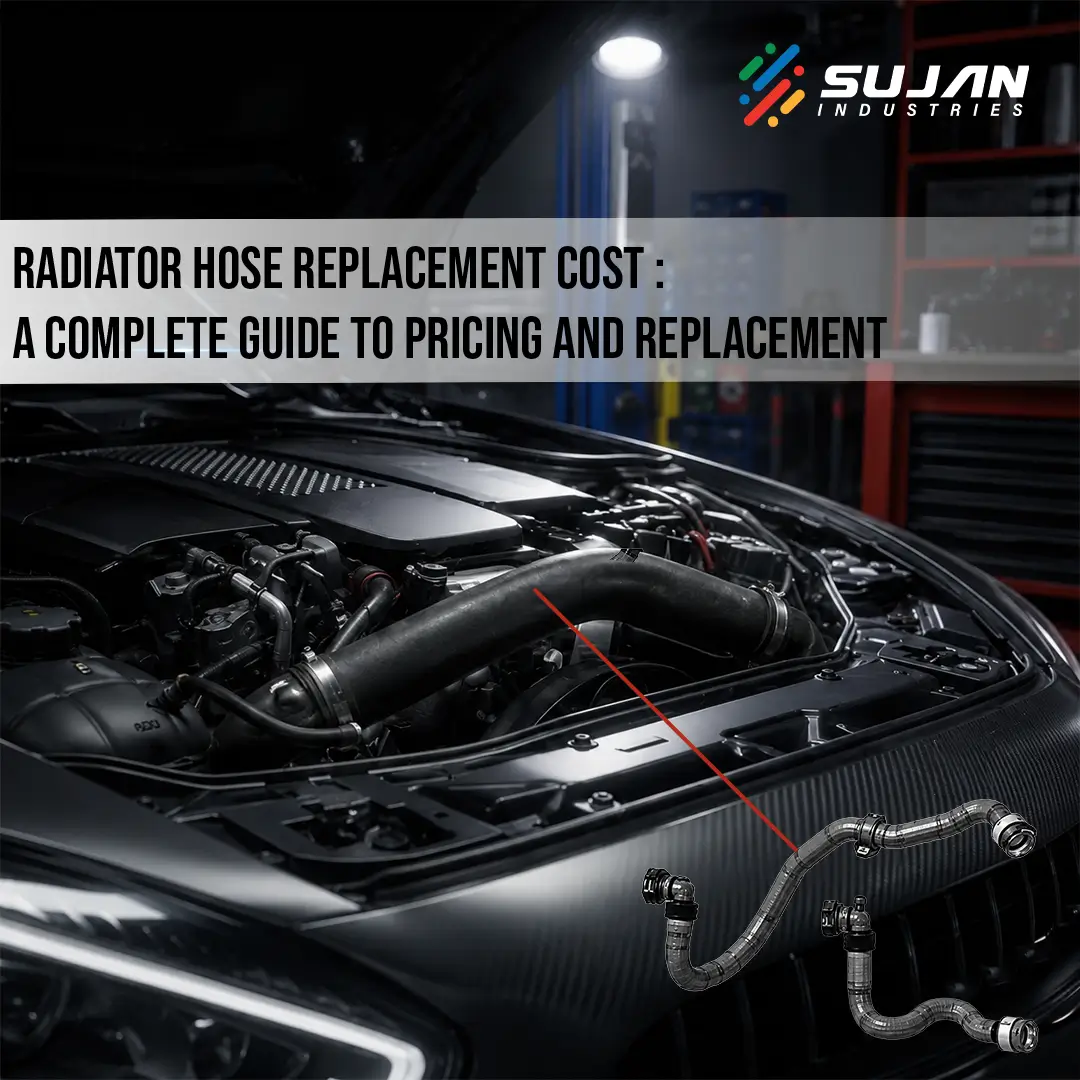
A rising temperature gauge or a coolant puddle under your car usually means a worn-out radiator hose. Understanding radiator hose replacement cost helps you budget properly and dodge a roadside breakdown. Prices swing depending on your vehicle, the type of radiator hose, and which country you’re in. This guide walks through real pricing, warning signs worth watching, and ways to save money without gambling on quality.
Every radiator hose gives out eventually; heat, pressure, and years of coolant flow wear the rubber down. The radiator hose replacement is dependent on the model of car and the type of hoses used, which hose has failed, and what your local garage charges per hour. In the US, for instance, the hose itself usually costs $20 to $60, while labor eats up the bulk of the bill at around $100 to $250.
| Country | Average Cost |
|---|---|
| India | ₹800 – ₹4,500 (parts + labor) |
| United States | $150 – $350 (approx. ₹12,500 – ₹29,000) |
| United Kingdom | £90 – £140 (approx. ₹9,500 – ₹14,800) |
| Australia | AU$50 – AU$150 (approx. ₹2,800 – ₹8,300) |
A handful of variables decide what you’ll actually pay at the counter. Once you know what’s driving the number, spotting an inflated quote gets a lot easier.
A reliable oil seal supplier ensures that industries can achieve constant efficiency of machinery regardless of changing operating conditions. Furthermore, good seals help avoid unplanned breakdowns and maintenance costs. In turn, increased efficiency and reliability will be ensured by this approach.
None of these factors works in isolation. A cheap radiator hose paired with a cramped engine bay can still land you a big bill. Radiator hoses sourced from established rubber products manufacturers in India tend to hold up better long-term, even if they cost slightly more upfront. India’s rubber industry isn’t slowing down either. The market is on track to hit $4.69 billion by 2030, growing at nearly 6% a year, according to Grand View Research.
A failing radiator hose rarely gives out without warning first. Here are the signs worth paying attention to before you’re stuck on the side of the road.
A radiator hose with cracks or bulges rarely survives another season of driving. Rubber weakens under constant heat cycles and pressure changes. Check the surface now and then for these warning signs.
Puddles near the front of your car often signal a loose or failing connection. Leaks starve the engine of coolant fast. Ignoring them can be risky, with serious overheating damage down the road.
Overheating may suggest that there is a problem with the radiator hose or some other malfunction within the cooling system. Frequent top-ups of coolant are another red flag worth noting. Both signs call for a quick inspection.
Not every hose problem needs a full replacement, but not every problem can be patched either. Knowing where the radiator hose repair cost line sits saves you from overpaying or underfixing the issue.
Minor leaks or small surface cracks sometimes only need patching or a tightened clamp. A quick fix like that can run as little as $15 to $40, according to AutoNation Mobile Service. It’s usually the cheaper route, as long as the rubber underneath still feels firm.
Deep cracks, bulging sections, or brittle rubber don’t respond well to patching. Once rubber degrades that badly, a full swap protects you far better than a stopgap fix. A new radiator hose costs more upfront, but it removes the guesswork.
The radiator hose repair cost usually comes in lower than a full replacement, since you’re not paying for a brand-new part. In the US, fixing a radiator with a bad radiator hose can run anywhere from $250 to $750, depending on what else the mechanic finds. Vehicle type and access still swing both numbers either way.
Although replacement has a higher upfront cost, but usually saves you a second trip to the garage. Repairs buy time, but rarely for as long as owners hope. Most mechanics will steer you toward replacement once a radiator hose starts showing real wear.
Lowering your radiator hose replacement cost doesn’t mean cutting corners on safety. A few practical habits go a long way toward keeping money in your pocket.
Stick with these habits, and your cooling system stays reliable for years. It also keeps you far away from a surprise overheating repair down the line.
A good cooling system comes down to trust. You want a radiator hose that won’t crack under heat, won’t cost a fortune to fix, and won’t leave you stranded on the road. A fair radiator hose replacement cost should buy you solid rubber, a proper fit, and pricing that doesn’t punish you for wanting quality.
At Sujan Industries, we build OEM-grade rubber hoses designed to take on real heat and pressure without breaking down early. Beyond radiator hoses, we also manufacture bonded rubber parts, anti-vibration mounts, and sealing components for automotive, railway, defence, and aerospace use.