



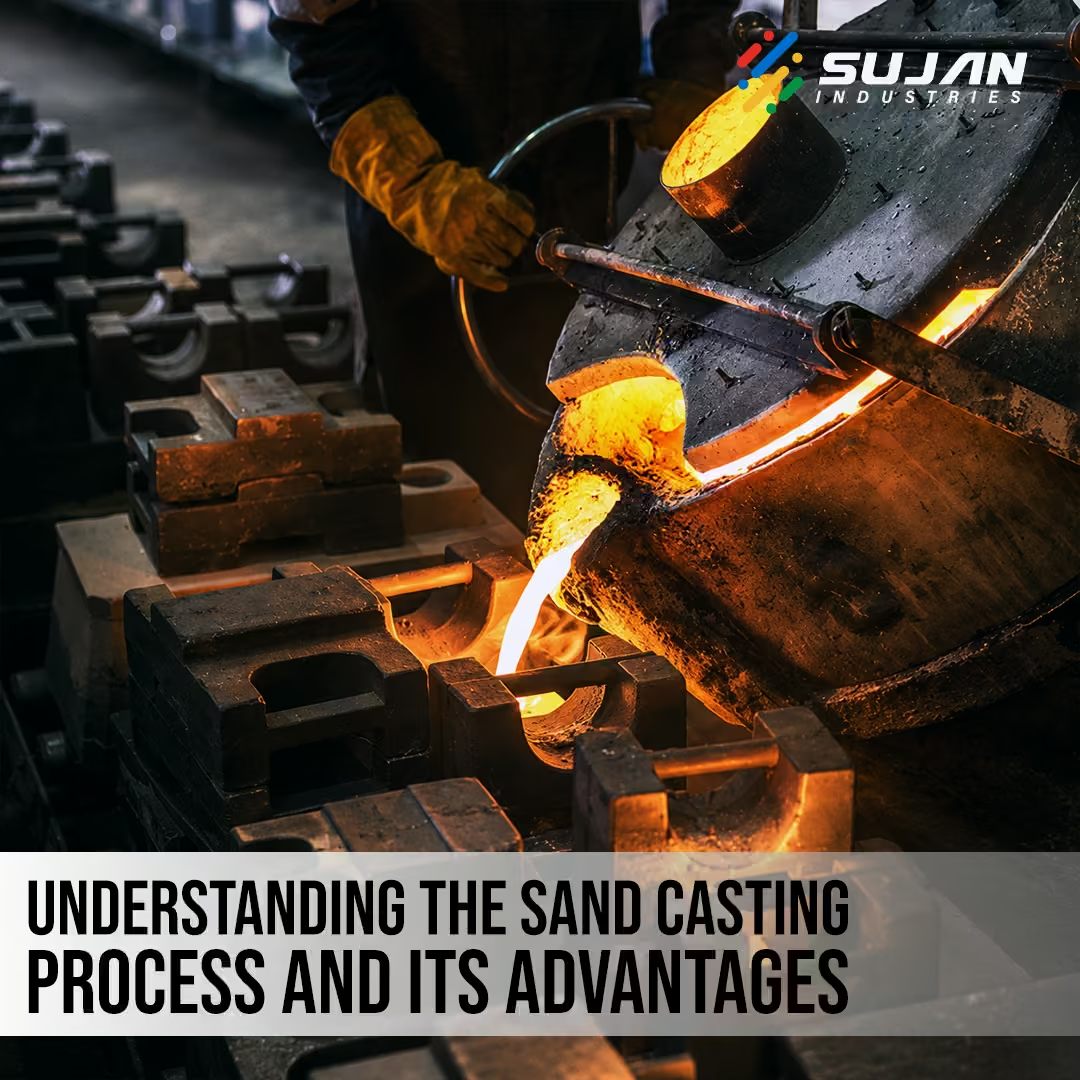
There are different methods used by the industry to cast metals to create various industrial parts. However, the sand casting process is still considered one of the most common casting techniques because of its flexibility and affordability.
This makes the creation of parts of both small and huge industrial-sized structures possible. Also, the ability to work with various metals makes it a desirable manufacturing technique for many industries around the world.
The casting process uses special sand mould forms that can create parts made of metal of all shapes and complexities. This liquid metal is poured into the cavity formed by the mold form to take up the desired shape.
The process of sand casting has been selected by manufacturers owing to its flexibility to cater to diverse manufacturing requirements and applicability to different metal alloys. This method can be used both for prototype production and for mass production.
There are various casting techniques available that can deliver specific benefits based on the needs of production, design, and materials. Understanding the differences makes it possible to select the right casting process.
The sand casting process usually involves less expensive tooling compared to die casting and investment casting techniques. The reuse of moulding sand is another factor that results in low costs during production. That is why it is chosen for economical production cases.
Sand casting can be used easily to cast simple as well as very complicated shapes of components. However, there are some other processes that require special tooling for complicated shapes. Additionally, it is able to produce internal cavities by using sand cores.
Other casting processes tend to produce better surface finishes and closer dimensional tolerances. But the sand casting process can get good quality by using the right sand and moulding process. Further finishing processes may also improve the quality of the product.
Industrial sand casting has an application for many more kinds of metals, both ferrous and non-ferrous, than any other technique. Sand casting can produce anything from small parts to very large castings. Such an ability makes it appropriate for varied industrial uses.
There are some casting techniques that work well under extremely high-volume production scenarios. Sand casting, on the other hand, is more appropriate for prototypes, batches, and mass production. This provides some form of flexibility for producers according to their needs.
In many cases, the manufacture of complex products necessitates an approach that caters to complicated geometries and variable dimensions. Thus, foundries still depend on tried-and-tested casting techniques.
In sand casting manufacturing, the use of cores is possible to form cavities inside parts. This capability ensures complicated design possibilities for different components in industries and engineering. The manufacturer is able to create intricate components without any need for secondary processes.
The process is highly effective with both ferrous and non-ferrous alloys. Companies have the opportunity to choose materials based on their durability. This versatility makes the process applicable in many different industries.
Many of the large parts used in various industries would require manufacturing processes that are capable of handling large-scale requirements. The sand casting process is qualified to produce parts ranging from small parts to even those having the size of locomotives. Being a process capable of handling the needs of heavy-duty equipment, construction machinery, and industrial machinery makes it ideal for stainless steel casting manufacturers in India.
Industrial sand casting is still very common due to its versatile and cost-effective nature. Sand casting provides high versatility for different manufacturing processes and components.
Recycling of sand used in mould formation helps reduce production costs. Requirements for tooling are less than those for some other methods. This ensures that the process is applicable to different manufacturing processes.
Manufacturing is capable of producing prototypes, small batches, or even large batches. This manufacturing process is flexible enough to meet different production demands. This flexibility caters to changing industrial needs.
A dependable steel foundry depends on reliable techniques of casting for the purpose of guaranteeing quality production. This is facilitated by mould preparation and control processes. Such processes contribute to meeting manufacturing standards.
It is important to pick an appropriate casting method that will help to achieve high-quality components, efficiency of the manufacturing process, and flexibility in production. The sand casting process has shown its importance in the industry due to its economic value, versatility of material, and ability to produce complex metal shapes.
As Sujan Industries, we serve the manufacturing industry through the provision of custom-engineered parts suited for challenging environments. Through our commitment to quality, engineering, and manufacturing processes, we have helped our customers realize durability and reliability.